“Europe is just expensive” — I hear this constantly, and it’s only half true. My first Europe trip cost me nearly ₹2.5 lakh for two weeks because I had zero plan. My second trip, same duration, cost under ₹1.3 lakh. Same continent, completely different approach. That’s the whole point of budget Europe trip planning: it’s not about which countries you skip, it’s about how you book.
Pick the Right Countries First
Western Europe (France, Switzerland, the Netherlands) will always cost more than Eastern or Southern Europe. If budget is the priority, lean toward:
- Portugal
- Poland
- Hungary
- Czech Republic
- Bulgaria and Romania
Quick answer: Successful budget Europe trip planning usually means weighting your itinerary toward Eastern and Southern Europe, where a daily budget of €40-60 covers food, local transport, and hostel accommodation — roughly half of what you’d spend in Paris or Zurich.
A Mixed Itinerary Still Works
You don’t have to skip Paris entirely. Balance it — three expensive days in Paris, followed by five cheaper days in Prague or Krakow, keeps your average daily spend manageable without feeling like you missed the “must-see” spots.
Flights: Timing Is Everything
Book flights 2-3 months ahead for the best fares into Europe from India, generally through hubs like Dubai, Doha, or Istanbul. Avoid flying into London or Paris directly if cheaper routes exist into secondary cities like Milan Bergamo or Berlin — budget carriers within Europe (Ryanair, Wizz Air, EasyJet) then connect you onward for surprisingly little.
Where to Sleep Without Overspending
Hostels aren’t just for 20-year-olds anymore. Plenty of “poshtel” options now offer private rooms with hostel-level pricing. A few strategies:
- Book hostels with kitchens to cut food costs significantly
- Look at guesthouses just outside city centers — 10-15 minutes by metro often halves the price
- Consider home-stays or Couchsurfing for at least a few nights if you’re comfortable with it
Eating Well Without Restaurant Prices
Grocery stores like Lidl and Aldi exist across most of Europe and are noticeably cheap. A picnic lunch with bread, cheese, and fruit from a local market, eaten in a park, genuinely beats a mediocre tourist-trap restaurant meal — and costs a fraction.
I’ve found that lunch specials (“menu del dia” in Spain, “plat du jour” in France) offer the same quality as dinner menus for half the price. Eat your big meal at lunch, snack light at dinner.
Free and Cheap Activities Across Europe
Most major European cities offer free walking tours (tip-based), free museum days (often the first Sunday of the month), and free entry to churches and public parks that are just as stunning as paid attractions.
- Berlin: free walking tours daily, plus free entry to many memorials
- Rome: churches with incredible art, zero entry fee
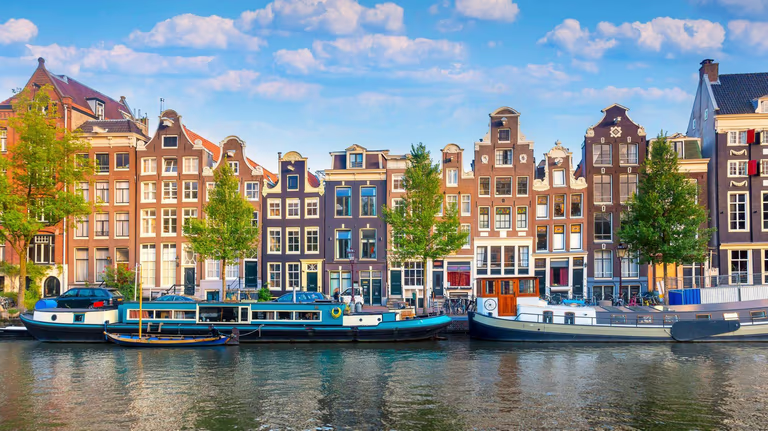
- Amsterdam: free to wander the canal districts, which is honestly the main draw anyway
Transport Within Europe
Trains are romantic but not always the cheapest option. Compare against budget flights and long-distance buses (FlixBus covers most of the continent affordably). Booking trains 60-90 days ahead, especially in France and Italy, locks in significantly lower fares than last-minute booking.
Currency and Card Tips
Avoid airport currency exchange counters — the rates are almost always worse. A forex card loaded before departure, or a card with no foreign transaction fees, saves a noticeable amount over two to three weeks of daily spending.
FAQ
What’s a realistic daily budget for Europe? €40-60 per day for budget travelers in Eastern/Southern Europe; €80-100+ in Western Europe.
Is it cheaper to book flights and hotels separately or as a package? Usually separately, especially with budget airlines — packages rarely beat piecing it together yourself.
What’s the cheapest month to visit Europe? Late autumn (November) and winter months outside the Christmas markets period tend to have the lowest prices.
Should I get a Eurail pass for budget travel? Only if you’re covering long distances across many countries. For 2-3 countries, individual tickets are often cheaper.
Is travel insurance necessary for a Europe trip? Yes, and for Schengen countries it’s actually a visa requirement, not optional.
Conclusion
Budget Europe trip planning really comes down to a handful of decisions made early — which countries, which season, which type of accommodation. Get those right and the rest falls into place without constant money stress on the ground. Start by mapping your route through cheaper countries first, then layer in one or two pricier cities you really can’t skip. [link to Europe visa guide here]
Verify current rules, prices, schedules and local conditions before making travel commitments.