India doesn’t do festivals quietly — I learned that fast, standing in the middle of a Holi crowd in Mathura, completely covered in color within the first ten minutes, laughing too hard to mind. If you’re researching traditional festivals in India to plan a trip around, going beyond the two or three most famous ones opens up an entirely different side of the country.
Holi — The Festival of Colors
Celebrated across India in March, Holi marks the arrival of spring and the triumph of good over evil, rooted in the story of Holika and Prahlad. Mathura and Vrindavan, considered Krishna’s birthplace region, host some of the most elaborate celebrations, stretching over several days rather than the single day celebrated elsewhere.
Quick answer: Among traditional festivals in India, Holi is the most internationally recognized, celebrated primarily in March with colored powder, water, and communal gatherings, though regional variations like Lathmar Holi in Barsana add distinctly local traditions to the core celebration.
Diwali — The Festival of Lights
Falling in October or November depending on the lunar calendar, Diwali celebrates Lord Rama’s return to Ayodhya after fourteen years of exile, symbolized by rows of oil lamps (diyas) lighting up homes and streets. Varanasi’s ghats during Diwali offer a genuinely different scale of celebration than a typical residential neighborhood, with the entire riverfront lit up in one continuous glow.
Regional Diwali Variations Worth Knowing
- West Bengal celebrates Kali Puja simultaneously, honoring the goddess Kali rather than focusing solely on Lakshmi
- South India often includes Naraka Chaturdashi rituals a day before the main celebration
- Gujarat treats Diwali as part of a broader new year celebration, extending festivities further
Durga Puja, West Bengal
Arguably Kolkata’s biggest cultural event of the year, Durga Puja transforms entire neighborhoods with elaborately themed pandals (temporary structures) housing idols of the goddess Durga. UNESCO added it to its Intangible Cultural Heritage list in 2021, recognizing its scale and community significance. The immersion (visarjan) on the final day, with idols carried to the river amid drumming and dancing, is genuinely something else to witness in person.
Pushkar Camel Fair, Rajasthan
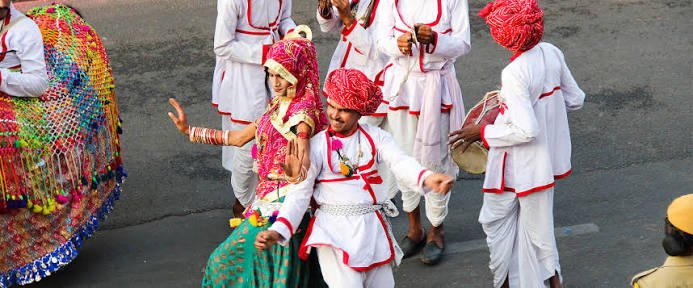
Part religious pilgrimage, part massive livestock trading event, the Pushkar Camel Fair draws thousands of camels, traders, and increasingly, international visitors, typically in November. Beyond the camel trading itself, the fair includes competitions, folk performances, and a genuinely chaotic, colorful energy that’s hard to replicate anywhere else.
Onam, Kerala
Celebrating the mythical King Mahabali’s annual homecoming, Onam features elaborate flower arrangements (pookalam), boat races (vallam kali) involving massive snake boats, and grand feast spreads (Onam sadhya) served on banana leaves with 20-plus dishes. It typically falls in August or September.
Hemis Festival, Ladakh
A stark contrast to the color-heavy festivals of the plains, Hemis Festival celebrates the birth of Guru Padmasambhava through masked Cham dances performed by monks at Hemis Monastery, usually in June or July. The high-altitude setting and Buddhist monastic tradition make this feel genuinely distinct from most other Indian festivals.
Planning a Trip Around a Festival
A few practical things worth knowing:
- Book accommodation months ahead for major festivals like Diwali in Varanasi or Durga Puja in Kolkata — prices spike significantly and availability drops fast
- Check exact dates yearly, since most Indian festivals follow lunar calendars and shift dates annually
- Regional festivals (Onam, Durga Puja) offer a deeper, less touristy experience than the most internationally famous ones
- Respect local customs specifically around photography — some rituals are considered private despite the public setting
FAQ
When is Holi celebrated in India? Typically in March, though the exact date shifts yearly based on the lunar calendar — check specific dates before booking travel.
Is it safe for tourists to participate in Holi celebrations? Generally yes, especially in organized celebration areas, though standard precautions around crowds and personal belongings still apply.
What’s the best festival to experience Indian culture as a first-time visitor? Diwali offers a broadly accessible experience with visual beauty (lights, decorations) that doesn’t require deep cultural context to appreciate.
Do I need special permission to attend festivals like Hemis in Ladakh? No special permission for the festival itself, though standard Ladakh travel permits may apply depending on your specific route and nationality.
Are traditional festivals in India celebrated differently by region? Significantly so — the same festival often carries different names, rituals, and emphasis depending on the state and local traditions.
Conclusion
Traditional festivals in India offer a window into the country that regular sightseeing simply doesn’t provide — the noise, the color, the sheer community energy is something you feel rather than just observe. Pick one regional festival outside the usual Diwali-Holi pairing for your next India trip, and build the whole itinerary around those dates. [link to India travel guide here]
(Suggested alt text: “Colorful powder thrown into the air during Holi celebration in India”)
Verify current rules, prices, schedules and local conditions before making travel commitments.