Getting stopped at check-in because a bag was 1.5 kg over the limit is one of those travel moments that ruins your morning instantly — and airline baggage rules seem to shift often enough that even frequent flyers get caught out occasionally. Here’s where things stand with current airline baggage rules, and what’s worth double-checking before your next flight.
Why Baggage Rules Keep Changing
Airlines, particularly low-cost carriers, have increasingly unbundled pricing — separating the base fare from baggage, seat selection, and even carry-on allowances in some cases. This isn’t universal, but the trend has accelerated across both international and domestic carriers over the past several years as airlines look for additional revenue streams beyond ticket price alone.
Quick answer: Airline baggage rules vary significantly by carrier and fare class, but the general trend across both full-service and budget airlines has been toward stricter carry-on size enforcement and additional fees for checked baggage that used to be included in the base fare.
Carry-On Size Enforcement Has Gotten Stricter
Airports have increasingly installed carry-on sizing checks directly at boarding gates, not just at check-in, catching bags that might have previously slipped through. Standard carry-on dimensions generally hover around 55x40x20 cm for most international carriers, though this varies enough between airlines that it’s worth checking your specific carrier before packing.
Budget Carriers Often Have Smaller Allowances
Low-cost carriers frequently enforce smaller “personal item” allowances than full-service airlines, sometimes requiring a paid upgrade just to bring a standard-size cabin bag onboard. Always check the specific fare class rules, since even the same airline can have different baggage allowances across its fare tiers (basic economy versus standard economy, for instance).
Checked Baggage Fees: What’s Changed
Many international full-service carriers still include one checked bag in standard economy fares on long-haul routes, though this isn’t universal anymore. Domestic and regional routes, even on full-service carriers, increasingly charge separately for checked baggage unless bundled into a higher fare tier.
A few patterns worth knowing:
- Basic economy fares increasingly exclude checked baggage entirely, even on major full-service carriers
- Weight limits for checked bags commonly run 20-23 kg for economy, though this varies by airline and route
- Overweight fees can be substantial — sometimes $50-100 or more per kg over the limit, making it far cheaper to ship excess items separately if you’re significantly over
Special Baggage: Sports Equipment and Musical Instruments
Airlines generally treat sporting equipment (skis, surfboards, golf bags) and musical instruments as special baggage categories, often with separate fee structures and size allowances distinct from standard checked luggage. Always contact the airline directly for these categories rather than assuming standard baggage rules apply.
How to Avoid Baggage Fee Surprises
A few habits that consistently save money and stress:
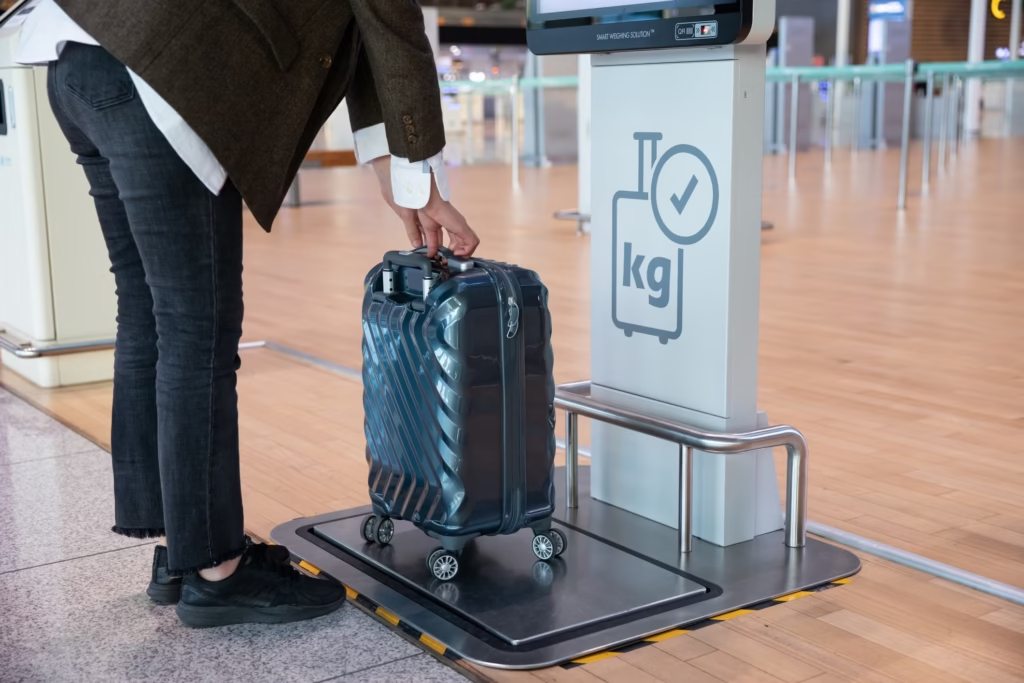
- Weigh your bags at home before leaving for the airport — a simple luggage scale costs very little and pays for itself on the first overweight bag avoided
- Check baggage allowances at the time of booking, not after, since fare class specifics affect what’s included
- Consider airline credit cards or loyalty status if you travel frequently, since many include free checked baggage as a benefit
- Pack a foldable extra bag for the return trip if you’re likely to bring back more than you left with (souvenirs, shopping)
Liquid and Restricted Item Rules Remain Largely Unchanged
Standard international security rules — 100ml liquid containers in a clear resealable bag — remain broadly consistent across most countries, though some airports have begun testing new scanning technology that may eventually relax these restrictions. Until officially confirmed at your specific departure airport, assume the standard rules still apply.
Regional Differences Worth Noting
US domestic carriers have historically charged separately for checked bags more consistently than many international counterparts, though this has been shifting. European budget carriers (Ryanair, Wizz Air) remain particularly strict on both carry-on size and checked bag fees, often among the highest overweight penalty charges in the industry.
FAQ
How do I check my specific airline’s baggage allowance? Check the airline’s official website using your exact fare class and route, since allowances vary significantly even within the same airline.
Are carry-on size checks getting stricter? Yes, many airports and airlines have added gate-side sizing checks in addition to standard check-in verification.
Do all international flights include a free checked bag? No, this varies significantly by airline and fare class — many basic economy fares now exclude checked baggage entirely.
What happens if my bag is overweight at check-in? You’ll typically be charged an overweight fee, which can be substantial — redistributing weight between bags or removing items is often cheaper.
Is it cheaper to pay for extra baggage online in advance or at the airport? Almost always cheaper in advance — airport baggage fees are typically significantly higher than pre-booked allowances.
Conclusion
Baggage rules have genuinely become more complex and fee-heavy across the industry, making it worth an extra five minutes checking your specific fare class allowance before you even start packing. Weigh your bags at home, check your airline’s current policy directly, and you’ll avoid the kind of check-in surprise that ruins a trip before it even starts. [link to international travel packing list guide here]
(Suggested alt text: “Checked luggage on airport scale next to boarding pass”)
Verify current rules, prices, schedules and local conditions before making travel commitments.